
The Guide Was Never the Rescue
August 24, 2026
What twelve years as a therapist, and one very old poem, taught me about coming home to yourself
Confession. I did not expect to be writing about Greek mythology this summer, but here we are, along with roughly nine million people on my Instagram feed who suddenly have Very Strong Opinions about whether Odysseus's ship should look like a Viking longship. Christopher Nolan's Odyssey came out a few weeks ago, shot entirely on IMAX 70mm film, because apparently retelling a three thousand year old story required two million feet of film and an actual Norwegian Viking warship standing in for a Greek bireme. Classicists have not recovered.
I sat in a theater in the middle of all of that noise, in genuine IMAX, and felt something I did not expect. Not nostalgia. Recognition. Because I have been telling some version of this story for twelve years, long before it had a quarter billion dollar budget and a cast full of people I would recognize anywhere. I told it in a much smaller room, with much worse lighting, to people who were not looking for a blockbuster. They were just looking for a way home.
I have told this story so many times in my office that I could tell it in my sleep.
A person walks in. They are exhausted in a way that sleep does not fix. And somewhere in that first hour, I find myself saying the same thing I have said for over a decade. This is going to feel like a journey. You are going to visit some islands you did not choose. You are going to find a cave you have to walk into, alone, even though I will be standing at the entrance the whole time, holding the lantern.
I did not invent that image. Homer did, three thousand years ago, in a poem about a man trying to get home from a war. I read The Odyssey the way most of us do, once, in school, half asleep, convinced it had nothing to do with my actual life. Then I became a therapist. And I watched person after person live some version of that story in my office chair, and I understood. It was never really about a man and a boat. It was about what it costs to become someone who can finally go home.
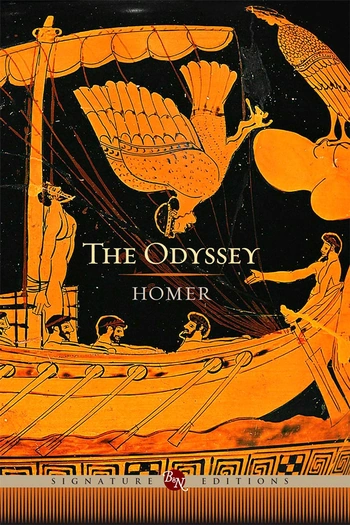
I have used this poem as a map for twelve years of sessions. Here is what it has taught me, it might teach you too:
1. The guide does not shorten the journey. They just bring a lantern into the cave you already have to walk through.
For a long time I thought my job was to get people out of pain faster. I have unlearned that, slowly, the way you unlearn anything that was actually protecting your own discomfort more than theirs. My job is not to walk the cave for you. It never was. It is to stand at the mouth of it so you are not standing there alone, and to trust that you already have what you need to find your way through the dark. And only you get to decide how long that walk takes. I cannot make you move faster than your own mind is ready to move, conscious or subconscious. The pace was always yours to set, never mine. That trust, more than any intervention I have ever learned, is the whole of the work.
2. You do not return home. You return different.
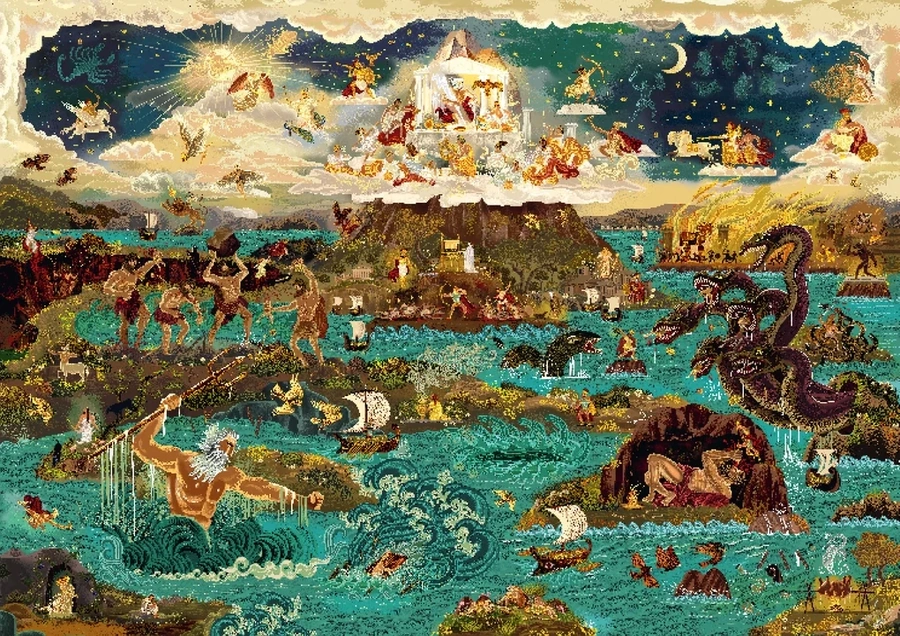
The Greek word for what Odysseus is doing is nostos. It gets translated as homecoming, but that is not quite right. He is not going back to the man he was. That man died somewhere at Troy, or on an island, or in a cave with a one eyed monster. What comes home is someone new, built out of everything the old version could not survive. I tell my clients this constantly, in different words. You are not trying to get back to who you were before the divorce, before the diagnosis, before the year that broke you open. That person is gone. You are building someone who can hold what happened. That is not a smaller task than getting your old life back. It is a much larger one.
3. Your scars are what make you recognizable.
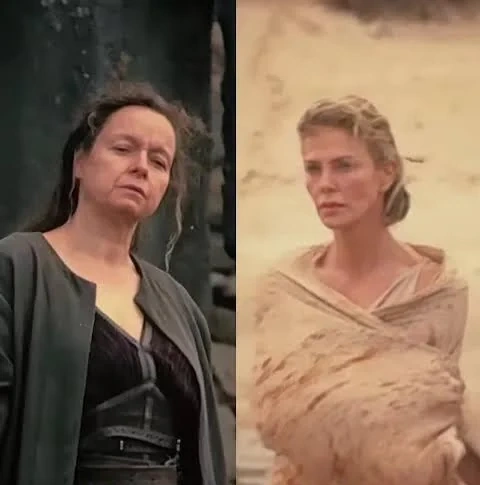
There is a moment near the end of the poem where an old woman, who raised Odysseus as a boy, is washing the feet of a stranger she does not recognize. And then her hands find an old scar on his leg, from a boar hunt decades earlier, and she knows him instantly. Twenty years, and a body remembers a wound better than it remembers a face. I think about this every time a client apologizes to me for their trauma, as though it makes them harder to love. It does the opposite. The people who are meant to find you again will find you by the very thing you are trying to hide.
4. Not all stuck looks the same.
There are two women in this poem who each keep Odysseus from getting home, and they could not be more different, and I think we flatten them into one lesson when they deserve two. Calypso offers him comfort. She offers him immortality, an island paradise, a life with no more suffering in it, if he will simply stay. Circe is a fight. He has to face her directly, work through an actual conflict, before anything real can happen between them. I see both of these constantly. Some of my clients are stuck because leaving would mean giving up something genuinely good, something that only costs them their becoming. Others are stuck because they keep avoiding the one hard conversation that would set them free. These are not the same kind of stuck, and they do not respond to the same kind of help.
5. Willpower was never the plan.
Everyone remembers that Odysseus resists the sirens. Almost nobody remembers how. He does not grit his teeth and power through it alone. He has his crew tie him to the mast, and he has them fill their own ears with wax so they cannot hear him beg to be untied. He builds the structure before he needs it, and he surrounds himself with people who will hold the line even when he cannot. This is one of the first things I try to help a client unlearn. Somewhere along the way, most of us were taught that healing is a private test of how hard you can grit your teeth. It is not. The real work of therapy rarely happens in the moment of temptation or relapse. It happens earlier, quietly, when a client builds their own version of the mast. The ritual, the phone call to a friend, the boundary named out loud before it is tested, the plan made on a good day for the bad one that is coming. Willpower is only ever what a person reaches for when that structure was never built in the first place.
6. Sometimes you have to go down before you can go forward.
At the exact midpoint of his journey, Odysseus does something that seems to make no sense if you are only reading for plot. He sails to the underworld and talks to the dead. He needs directions home, and the only person who can give them to him is a dead prophet, so down he goes. I have never once seen someone heal in a straight line away from their past. The ones who do the deepest work are always, at some point, willing to go down and speak with what they have been avoiding. Not to live there. Just to ask it the question they have been too afraid to ask.
7. Waiting can be its own kind of boundary.
Penelope spends twenty years being described as the one who waits, and I think that word has done her a disservice for three thousand years. She is fending off over a hundred men who want her house, her son's inheritance, and her body, and she does it not by leaving or fighting but by outwitting every one of them, night after night, for two decades. That is not passivity. That is one of the longest acts of boundary keeping in all of literature. I say this to clients who feel ashamed that healing, for them, has looked like staying steady instead of dramatically leaving. Sometimes the strength is in what you refuse to give away while you wait for the right moment to act.
8. No one can string your bow for you.
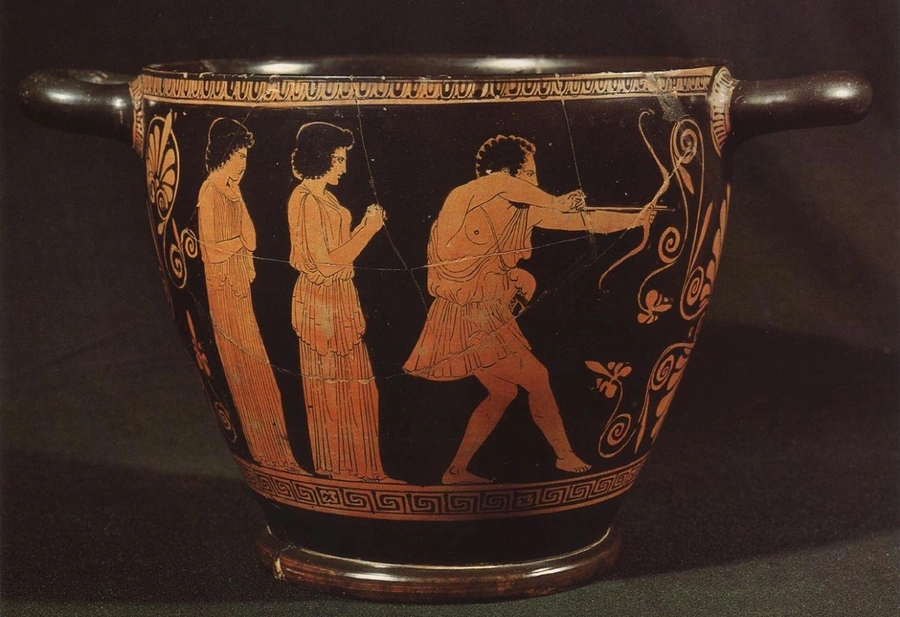
Near the very end, there is a contest. Only the man who can string Odysseus's own bow will be allowed to claim his life back. And of course, no one can do it. Not because they lack strength, but because the bow was shaped by his hands, over years, and it will only answer to him. Athena, his guide through the entire poem, is nowhere in this scene. She has already done her part. What is left is his alone to do. I think about this every single time a client reaches the place in their work where I have nothing left to offer them except my belief that they can do the next part themselves. I cannot string anyone's bow. I have never once been able to. All I have ever been able to do is hand someone the lantern and stand at the mouth of the cave, waiting, while they walk in and come back out someone new.
Twenty years, a war, an underworld, a wife who refused to give her house away, and a bow only he could string. That is what it took Odysseus to come home. Most of the people I have sat across from in twelve years of practice have needed almost exactly that much. Not because they are broken. Because becoming someone who can hold their own life again was never going to be quick work.
The guide was never the rescue. She just makes sure you are not walking through the dark alone.
So here is what I want to say to every person who has ever sat across from me in that small room with the bad lighting, and to everyone reading this now.
It has been the greatest honor of my working life to hold the lantern. But let us be honest about who this story was actually about. It was never the guide standing at the mouth of the cave. It was always the one who walked into the dark, faced what was waiting there, and came back out someone new.
You were the hero the whole time. I only ever got to walk beside you while you found that out.